A partner ecosystem is a network of independent organizations that work together to market, sell, deliver, or support a company’s products or services.
Each partner brings unique expertise to the relationship. Together, they help businesses reach new customers, enter new markets, and deliver greater value than they could on their own.
Partner ecosystems have become a key growth strategy for modern B2B organizations. In fact, Forrester Consulting reports 76% of executives say partnerships are essential for achieving their revenue goals.
As customer expectations grow and markets become more competitive, companies need the reach and local knowledge that partners provide.
Building a successful partner ecosystem involves more than recruiting new partners. Long-term success depends on helping partners execute with confidence. When partners have the right guidance, they feel more confident taking action. They can market your solutions more effectively and contribute stronger business results.
In this guide, you’ll learn what a partner ecosystem is, why it matters, how to build a strong strategy, and what it takes to help ecosystem partners succeed over time.
What Is a Partner Ecosystem?
A partner ecosystem is a network of independent businesses that work together to create more value for customers while supporting shared business goals.
Within every partner ecosystem, vendors and partners have different roles.
The vendor owns the product or service. It defines the brand, positioning, and overall go-to-market strategy.
Partners help turn that strategy into customer success. Some market the solution. Others sell it. Some provide implementation or ongoing support. Others extend the solution with complementary technology or services.
One distinction is important.
Partners are independent businesses. They are not employees or members of an internal sales team. They have their own customers, their own expertise, and their own business goals.
That independence gives a partner ecosystem its strength. Organizations can expand into industries, regions, and customer segments they could not efficiently reach on their own.
A successful partner ecosystem often includes several types of partners.
- Channel and reseller partners introduce solutions to new markets and customer segments.
- Technology partners build integrations that expand product capabilities.
- Systems integrators help customers deploy and configure solutions.
- Service and implementation partners guide onboarding, customization, and adoption.
- Managed service providers deliver ongoing operational support.
- Strategic alliance partners collaborate on long-term business initiatives.
- Independent software vendors (ISVs) create complementary applications.
- Agencies help execute marketing and demand generation programs.
Each partner serves a different purpose. Together, they help create a stronger customer experience and a more valuable partner ecosystem.
Why Partner Ecosystems Matter
Few organizations can meet every customer need on their own. A partner ecosystem brings together businesses with different strengths. That allows organizations to solve larger problems while delivering a better customer experience.
Growth
Partners already understand the markets they serve. They know their customers. They understand regional needs and industry challenges. That local expertise helps vendors expand their reach without building every capability internally.
Innovation
Technology partners create new integrations. Service partners help customers adopt solutions more successfully. Strategic alliances bring together organizations with complementary expertise. Each relationship strengthens the overall value delivered to customers.
Business Impact
The Strategy Institute found that companies with strong partner ecosystems grow five times faster than those without them. In addition, 84% of sales professionals say partner selling has a significant impact on revenue according to Salesforce.
Improved Operational Efficiency
Organizations can share expertise instead of duplicating it. They can collaborate on marketing instead of building separate campaigns. They can combine specialized knowledge to create better customer outcomes.
Building an Effective Partner Ecosystem Strategy
Every successful partner ecosystem begins with a clear purpose.
The goal is not to recruit the largest number of partners. The goal is to build relationships that create better customer outcomes and support long-term business growth. It all begins with these practical steps.
- Start by defining what success looks like: Your strategy should support measurable business goals. You may want to expand into a new market. You may want to increase partner-sourced revenue. You may want to improve customer retention. Clear objectives make it easier to decide which partnerships will create the greatest value.
- Next, define your ideal customer profile: Think about the industries you serve. Consider the types of organizations you want to reach. Identify the business challenges your customers are trying to solve. Those insights will help determine which partners belong in your ecosystem.
- Look for partners that complement your business: The strongest ecosystems combine different capabilities. A technology provider may work alongside a systems integrator. A reseller may partner with a consulting firm. Together, they solve broader customer challenges than either organization could solve alone.
- Every partnership should support a shared value proposition: Customers should understand why the organizations are working together. They should also understand how the partnership creates additional value.
- Strong governance keeps the ecosystem aligned: Partners should understand their roles from the beginning. Expectations should be clear. Communication should remain consistent. Success should be measured against shared goals.
- Finally, think beyond immediate opportunities: The healthiest partner ecosystems are built for long-term collaboration. When partners stay focused on customer success, they continue creating value for one another over time.
How to Identify the Right Partners
The right partners strengthen your partner ecosystem.
The wrong partners create unnecessary complexity.
Strong partnerships combine different expertise. A technology partner may expand your solution. An implementation partner may help customers achieve success more quickly. Together, they create a better experience than either organization could provide alone.
Partners should be able to work together without creating unnecessary friction. A smooth experience benefits both customers and the organizations involved. Here are just a few key factors to help you identify the right partners.
Look for partners with:
- A shared audience and natural opportunities to work together
- The ability to complement your business
- Technical compatibility
- Strong industry knowledge
- A strong reputation in the market
- A history of customer success
- A willingness to commit to collaboration and shared growth
- A vision for the future
The strongest relationships continue to evolve. They adapt as customer needs change. They invest in innovation. They remain committed to creating value together.
A successful partner ecosystem is not measured by the number of partners it includes. It is measured by how effectively those partners work together to deliver better outcomes.
Partner Enablement: The Key to Ecosystem Success
Recruiting partners is an important milestone, but it is not the finish line.
A successful partner ecosystem depends on what happens after a partner joins your program.
Partners need the confidence to market your solutions and the ability to act quickly. Without that support, even the strongest partnerships can lose momentum.
Move Beyond a Content Library
Many organizations assume that providing a content library is enough. In reality, access to content is only one piece of the puzzle.
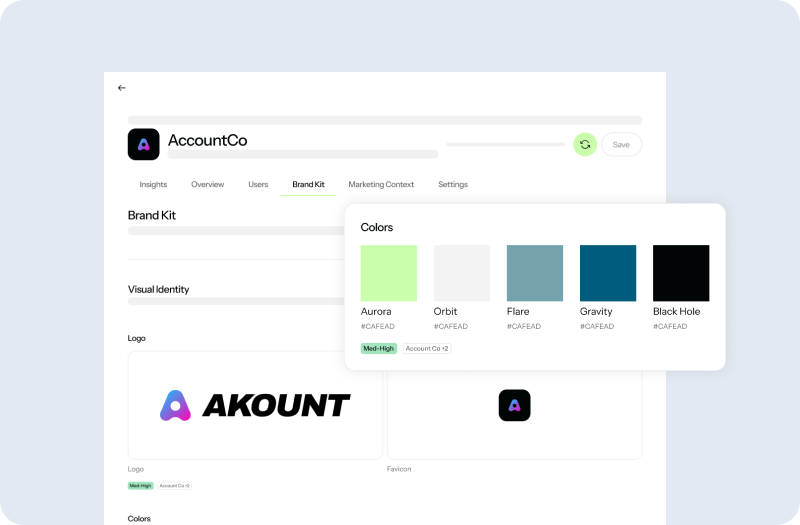
Partners also need clear direction. They need marketing that fits their customers and their market. They need confidence that every campaign reflects the vendor’s brand and messaging.
Make Execution Easy
Partners are independent businesses. They serve different industries, operate in different regions, and have different levels of marketing expertise. Most are balancing multiple priorities at once. If launching a campaign requires too many manual steps, participation naturally declines.
Start with Practical Support
Partners should have access to sales resources that help them speak confidently with customers. Training should answer common questions without creating unnecessary complexity. Marketing materials should be easy to personalize while remaining consistent with brand standards.
Prioritize Localization
As partner ecosystems expand, localization becomes just as important. A campaign that works well in one market may need different messaging, imagery, or language in another. Making those adjustments quickly allows partners to stay relevant without starting from scratch.
Lean on Technology
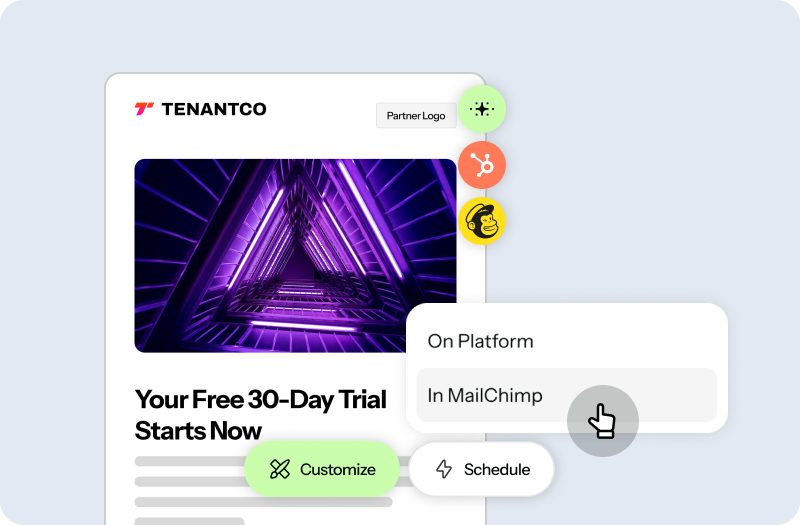
AI can guide partners through campaign creation, recommend relevant content, and personalize marketing for different audiences. Instead of searching through folders or waiting for approvals, partners can move from planning to execution much faster.
When partners can take action with confidence, they participate more often. They launch more campaigns. They create more opportunities for both themselves and the vendor.
A successful partner ecosystem is built on that momentum. It gives partners the tools to succeed without creating more work for them.
Measuring Partner Ecosystem Success
A growing partner ecosystem is a positive sign. Active partners are what create business value.
Many organizations focus on how many partners have joined the program. That number tells only part of the story. The better question is whether partners are participating and contributing to revenue.
Strong measurement begins with partner activity. Are partners engaging with marketing programs? Are they launching campaigns? Are they using the resources available to them?
From there, the focus shifts to business outcomes.
Useful metrics often include:
- Partner activation
- Campaign participation
- Pipeline contribution
- Partner-sourced revenue
- Partner-influenced revenue
- Customer retention
Together, these measurements show whether the ecosystem is creating meaningful growth.
Regular business reviews help keep programs moving in the right direction. They highlight successful partnerships and reveal where additional support may be needed. They also help identify opportunities to improve campaigns, refine enablement, and strengthen partner relationships.
Common Challenges in Partner Ecosystems
Every partner ecosystem becomes more complex as it grows, and that complexity brings its own set of challenges. Here are some of the most common hurdles to success.
Partner Disengagement
Partners rarely stop participating because they lack interest. More often, the work becomes difficult. Marketing programs may require too many approvals. Content may be hard to find. Campaigns may take too long to personalize.
Small obstacles quickly become large barriers.
Maintaining Consistency
Consistency is another challenge. Independent organizations naturally communicate in different ways. Without clear guidance, messaging can drift away from the vendor’s positioning. Over time, that affects both customer experience and brand trust.
Visibility
Visibility also becomes more difficult as partner networks expand.
Partner teams need to understand what is working and where additional support is needed. Without reliable reporting, those decisions become much harder.
The strongest partner ecosystems reduce friction wherever possible. They establish clear governance, simplify execution, and maintain open communication. Those practices help partners stay engaged while making programs easier to manage at scale.
Technology That Supports Modern Partner Ecosystems
Technology helps partner ecosystems grow without adding unnecessary complexity.
Each platform plays a different role.
Customer relationship management systems help organizations manage customer relationships and sales opportunities.
Partner relationship management platforms organize partner programs and provide a central place for resources and collaboration.
Analytics platforms measure engagement and business performance. They help organizations understand which activities are creating results.
These systems work best when they support one another.
AI adds another layer by making execution easier for partners. Rather than replacing existing technology, it helps partners get more value from it. AI can recommend relevant content, personalize campaigns for different markets, and reduce the manual effort required to launch marketing programs.
The objective is not more technology.
The objective is to make it easier for partners to act.
When systems reduce friction instead of adding it, partners spend less time navigating tools and more time building customer relationships.
The Future of Partner Ecosystems
Partner ecosystems will continue to shape how businesses grow.
Customers expect connected experiences and complete solutions. That requires organizations to work together more closely than ever before.
AI will play an increasingly important role in that collaboration. It will help partners find information faster, personalize campaigns more easily, and execute marketing with greater confidence.
Data will also become more valuable. Organizations will gain deeper insight into partner engagement, campaign performance, and revenue contribution. Those insights will help teams continuously improve their programs.
The most successful partner ecosystems will make collaboration easy.
They will help partners execute without unnecessary friction. They will continue improving as customer needs and market conditions evolve.
Every Partner, Activated
A successful partner ecosystem grows when every partner has the confidence to take action.
That requires moving beyond simply giving partners access to content. It requires simple, guided execution that helps partners market more effectively without adding complexity.
Structured’s AI-Native Partner Marketing Automation Platform (PMAP) helps enterprise organizations activate partners at scale. Partners can create personalized, on-brand campaigns in minutes, while marketing teams maintain governance and gain visibility into performance.
Discover how Structured helps turn partner ecosystems into revenue engines.