GenAI brings ideas to life. Agentic AI carries them across the finish line. The result is supercharged partner performance.

Channel marketing is at a crossroads. Opportunity has never been greater, but neither has the complexity. Marketers are creating more content than ever, across more platforms, for more partners who all want to grow. Yet even with powerful tools at their fingertips, too much of that effort stalls before it reaches the field. Campaigns sit unpublished, assets go unused, and partners, busy running their businesses, struggle to find what they need when they need it.
It’s not a lack of will or skill. It’s a signal that the systems built to support partners haven’t kept up with how they actually work.
That’s where the next era begins. Where Generative and Agentic AI come together to bridge the gap between engagement and execution, finally.
That’s the real opportunity in front of us. Not just smarter tools, but more responsive systems. Globally, 62% of companies surveyed expect ROI of more than 100% from agentic AI, with some nearly doubling their investment. And by 2027, fully 86% of companies worldwide expect to be up and running with agents. (Source: PagerDuty)
Agentic AI isn’t magic, but it’s close when used with the right intent. When paired with human judgment and clear goals, it becomes a powerful force multiplier.
We Don’t Need More Drafts. We Need More Delivery.
When you have hundreds or thousands of partners, even the best campaign won’t scale if the handoff stalls. Generative AI has made content production faster and easier, but in most organizations, content alone doesn’t move the needle. Teams can produce assets all day, but unless those assets reach the right audience or support the next action, they haven’t done their job. That’s the gap where most systems fall short.
It’s often referred to as the AI execution gap, which is the space between what AI creates and what actually gets delivered, launched, or acted on. Agentic AI is designed to close that gap. Instead of stopping at output, it works across steps. It remembers the objective, organizes next actions, and coordinates the supporting tasks. It doesn’t replace human strategy or creative thinking, but it does ensure the work keeps moving without someone having to manually drive every step.
AI Knows the Goal (and Doesn’t Need Reminders)
The word “agent” is getting thrown around a lot right now, and it’s not always clear what it means. Agentic AI refers to fully autonomous systems that can check your email, respond to meeting invites, schedule calendar events, and even use your actual credit card to place online orders. It understands goals, manages steps, and follows through without needing constant prompting.
In channel marketing, agents are not replacing partner enablement or vendor oversight. Instead, they are shouldering the operational load. It’s like having a thousand digital team members ready to execute instantly, around the clock.
Structured’s system, for example, includes more than 20 AI agents that work together seamlessly across campaign development. In the near future, there will be the possibility of nearly unlimited agents. The only limitation is our imagination (and we can build an agent for that, too.)
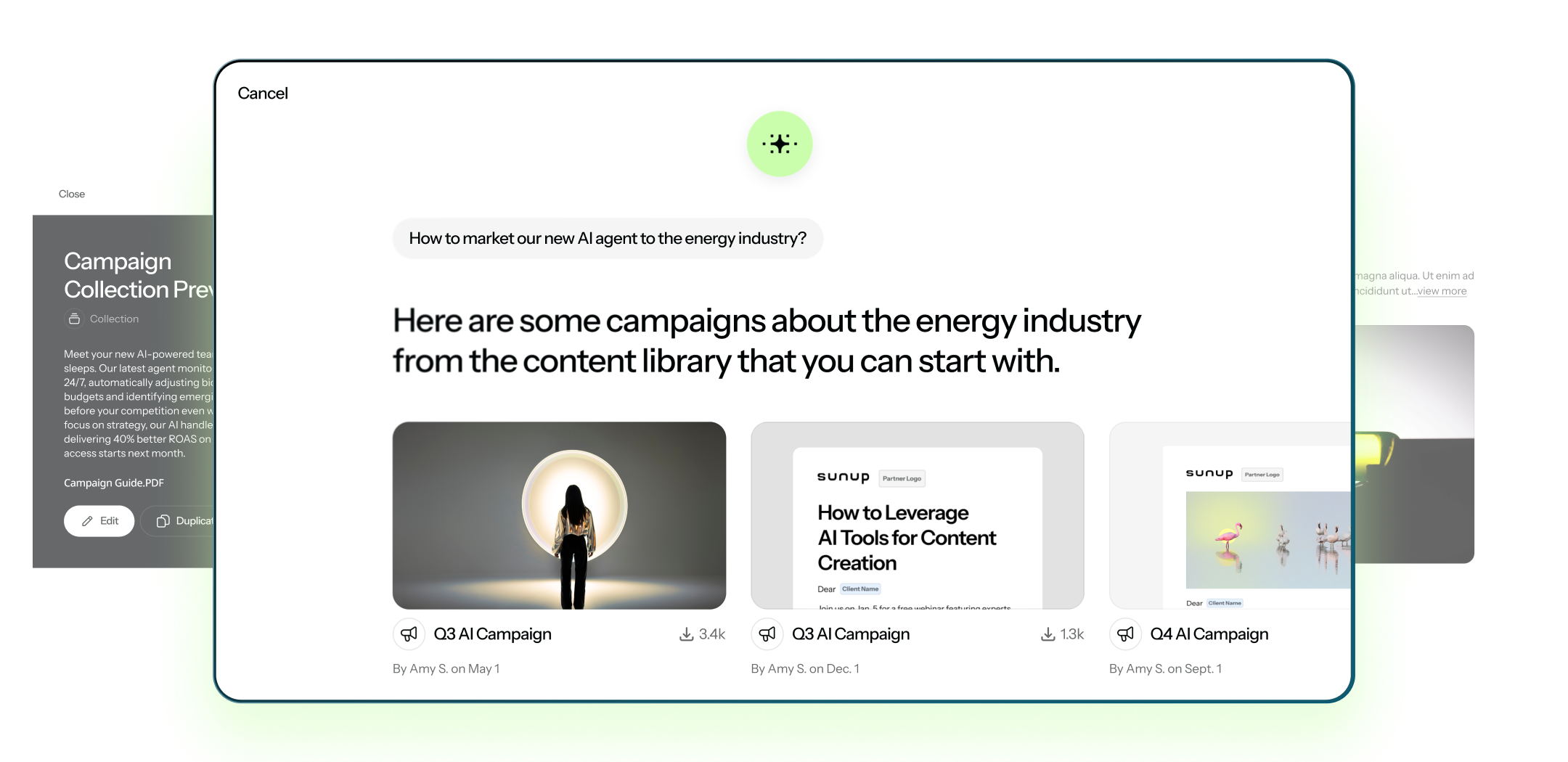
A Campaign Creator agent might begin by drafting messaging tailored to a partner’s audience and objectives. Once complete, it hands the work off to the Brand Guide agent, which checks for alignment with visual standards and brand tone. From there, a Localization agent adapts the content into different languages and formats for global distribution. Each agent supports a defined role, one that would normally require manual input or human review.
Instead of managing these steps one by one, a person reviews the combined output at the end, refining or approving the full campaign in context. That’s what sets agentic systems apart. They work more like a team than a tool, allowing users to continue with higher-value tasks.
Partners Don’t Speak Funnel. That’s the Agent’s Job
If you want a clear view of where agentic AI can make an immediate difference, look at channel partners.
Most partners aren’t marketers. They’re product specialists, salespeople, or technical advisors. They’re experts in what they sell, but they’re not fluent in campaign strategy, digital funnels, or content planning. So when they’re handed a portal full of templates and tools, they don’t know where to start. And they’re too busy to try and figure it out.
Many partner platforms assume a level of marketing fluency that just doesn’t exist in the field. The result is low engagement, underused resources, and too much reliance on one-size-fits-all content.
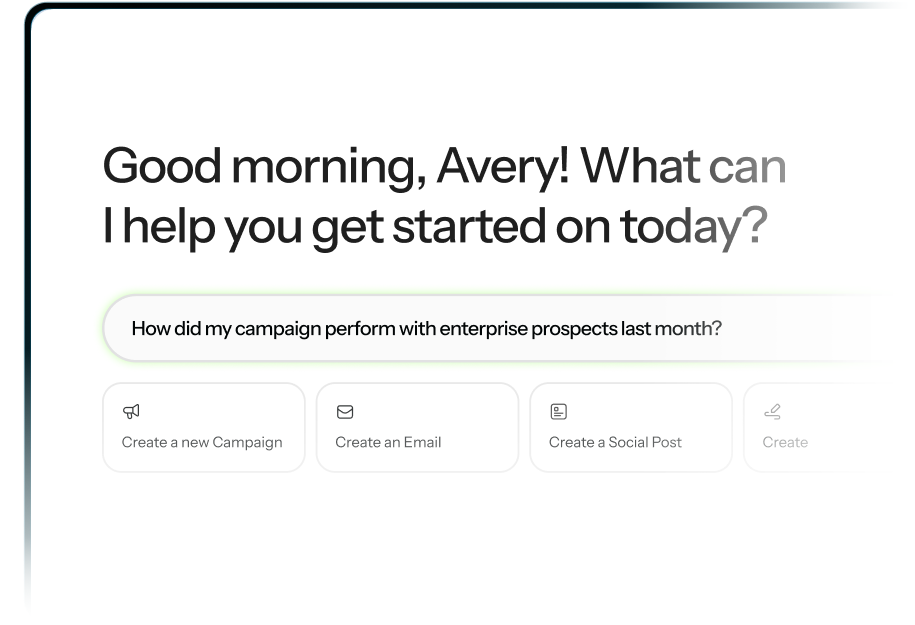
Agentic AI changes that dynamic. The agent becomes the expert and understands the partner’s role, industry, audience, and goals. So, instead of asking a partner to choose the right format or map out a funnel, it lets them “just ask” for help in their own words, and then does the work of translating that into a complete, ready-to-launch campaign.
In a space where traditional tools have stalled, agentic systems give partners access to something they’ve never had before: a marketer that’s always available, always brand-safe, and ready to get things done.
And the impact doesn’t stop with the partner. Vendors see the benefit in real business terms, including faster campaign launches, higher partner engagement, and better use of existing marketing resources. When more partners activate more often, the entire channel becomes more productive and profitable.
In essence, agents can help unlock revenue that would otherwise remain dormant in underutilized partner channels.
AI Doesn’t Replace Talent. It Buys Back Time.
Introducing new technology often raises a question: will this mean fewer people, or less creativity?
The answer is no when it’s done thoughtfully and purposefully.
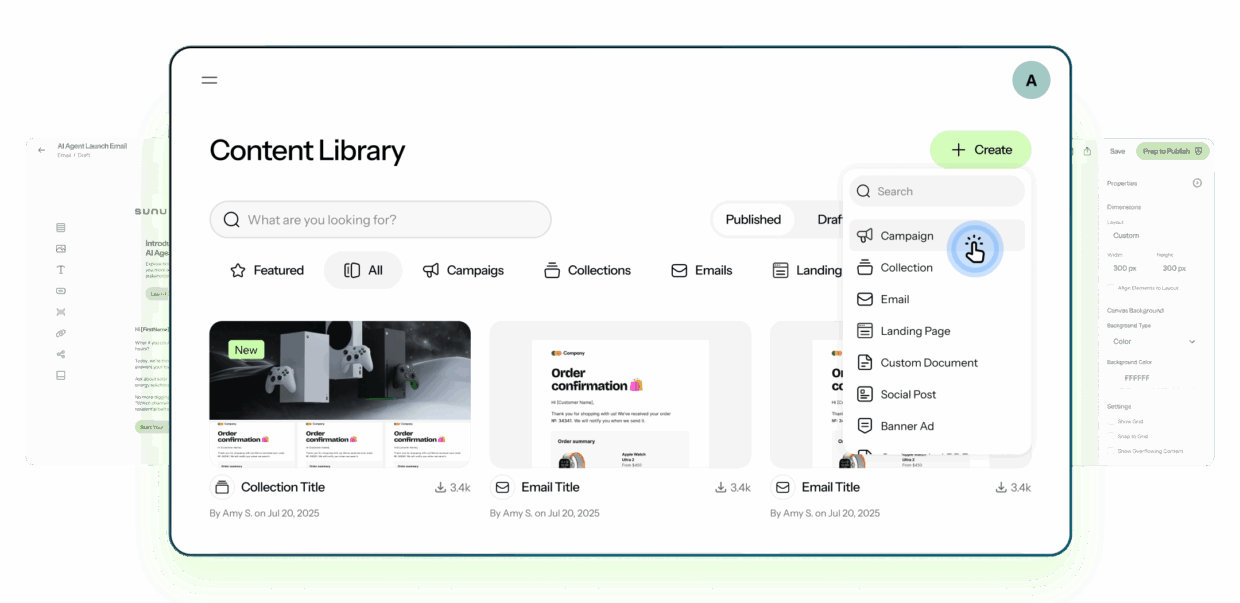
Agentic AI handles repetitive work like formatting, compliance checks, localization, campaign setup, freeing people to focus on higher-value tasks like building new product lines, exploring global markets, and pursuing ideas they have shelved for years. When teams aren’t overwhelmed and can work with agency, performance improves. People bring more energy, creativity, and loyalty, all of which boost long-term results.
AI isn’t replacing the team. It supports the team by offering focus, clarity, and a chance to lead.