Personalization has become one of the most important priorities in modern marketing. Buyers expect content, messaging, and campaigns that reflect their industry, business goals, market conditions, and challenges. Most vendors already recognize this shift and have invested heavily in audience segmentation, marketing campaign planning, and content creation designed to make marketing more relevant.
The challenge is not understanding the value of personalization. The challenge is extending personalization across a partner ecosystem.
Partner marketing introduces a layer of execution that does not exist in traditional direct-to-customer marketing. Vendors may define strategy, build marketing campaigns, and establish brand standards, but partners are often responsible for bringing those campaigns to market. Every partner serves a different audience, operates in a different environment, and may require different assets, messaging, or branding considerations to engage customers effectively.
As partner ecosystems grow, this challenge becomes more pronounced. What works for a handful of partners becomes much harder to manage across hundreds or even thousands of organizations. Marketing teams often find themselves balancing two competing priorities: providing partners with enough flexibility to reach local audiences while maintaining governance, visibility, and brand control.
At Structured, we see this challenge repeatedly across enterprise partner ecosystems. The issue is rarely a lack of strategy. More often, personalization breaks down because execution relies on manual effort. Content requests, localization projects, approval cycles, and campaign customization workflows create friction that slows partner activation and limits scale.
The organizations that succeed are not necessarily creating more campaigns. They are making it easier for partners to execute relevant campaigns quickly, efficiently, and within approved guardrails.
What Does Personalized Marketing Mean in Partner Marketing?
In partner marketing, personalization means more than changing a headline or inserting a company logo. It means adapting campaigns so that they resonate with specific audiences while remaining aligned with broader marketing objectives.
This may involve tailoring campaigns for industries, regions, customer segments, or partner brands. A manufacturing audience may respond to different messaging than a healthcare audience. Buyers in North America may have different priorities than buyers in Europe. One partner may focus on enterprise accounts while another specializes in mid-market customers.
Because of these differences, personalization must account for the realities of local markets while maintaining alignment with the vendor’s overall strategy.
Within partner ecosystems, vendors and partners play distinct roles.
- Vendors create strategy, establish messaging frameworks, develop content, and define brand standards.
- Partners execute locally, applying their understanding of customer needs, competitive dynamics, and market conditions to bring campaigns to life.
As ecosystems expand, personalization must scale across a distributed network rather than a single marketing team. This is what makes partner marketing unique.
Organizations looking at how to personalize marketing often focus on creating more content. While content is important, personalization in partner ecosystems is fundamentally an execution challenge. Success depends on giving partners the ability to launch relevant campaigns efficiently without creating unnecessary administrative work for vendor teams.
Personalization is not just changing messaging – it is enabling partners to deliver relevant campaigns in-market.
Why Personalized Marketing Is Difficult to Scale
Most organizations understand the benefits of personalization. The challenge is turning that vision into repeatable execution across a large partner network.
Manual Customization Creates Bottlenecks
Many partner marketing programs still rely on manual processes to customize campaigns.
Partners request changes. Marketing teams review those requests. Designers update assets. Compliance teams approve materials. Campaigns move through multiple stakeholders before they can be launched.
Each individual request may seem manageable, but the workload increases rapidly as partner ecosystems grow. Content requests accumulate, design revisions take time, approval cycles lengthen, and campaign setup becomes increasingly difficult to manage.
Marketing teams often find themselves spending more time supporting requests than driving strategic initiatives. Partners wait for assets instead of engaging customers. Momentum slows, and opportunities are missed.
Global Partner Ecosystems Increase Complexity
Global ecosystems add another layer of difficulty because different markets require different approaches.
Campaigns often need translation, localization, and regional adaptation before they can be launched successfully. Compliance requirements vary across countries and industries, introducing additional review processes and approval requirements.
Without scalable systems, localization can become one of the biggest barriers to execution. The more markets an organization supports, the more difficult it becomes to personalize campaigns through manual workflows.
One-Size-Fits-All Campaigns Reduce Engagement
When personalization becomes difficult to manage, many organizations default to generic campaigns.
Unfortunately, generic campaigns rarely perform as well as campaigns designed for specific audiences. Customers expect relevance. They want personalized content that reflects their industry, challenges, and priorities.
Partners understand this because they interact with customers every day. However, they need the ability to adapt campaigns if they are going to market effectively.
Without that flexibility, customer engagement often declines and campaign performance suffers.
Vendors Cannot Manually Support Every Partner
Enterprise ecosystems frequently include hundreds or thousands of partners. Each partner may require different campaign variations, localized messaging, audience-specific content, or branding adjustments.
The number of potential campaign combinations grows rapidly, while internal resources remain limited. Even the strongest marketing teams cannot manually support every partner at scale. Eventually, execution becomes constrained by available resources and not strategic intent.
Personalization fails when execution depends on manual effort.
Why Partner-Executed Personalization Matters
Partners are often closest to the customer, making them a critical part of successful personalization efforts.
Partners Understand Their Local Markets
Partners interact directly with customers and prospects, giving them valuable insight into regional audience preferences, industry-specific messaging requirements, and customer buying behaviors.
This local knowledge helps partners identify which campaigns are most likely to resonate and which messages will generate engagement. When partners can apply those insights within approved campaign frameworks, marketing becomes more relevant without sacrificing oversight.
Partners Need Flexible, Ready-to-Launch Campaigns
Partners want to focus on generating pipeline and revenue, not navigating complicated marketing systems.
They need campaigns that can be adapted quickly, customized easily, and launched without extensive support from vendor marketing teams. Faster adaptation helps partners respond to opportunities more effectively while reducing dependency on centralized resources.
The easier it is to launch campaigns, the more likely partners are to participate.
Personalized Campaigns Increase Engagement
Relevant campaigns create stronger engagement because they reflect the needs of specific audiences.
When messaging aligns with local realities, customers are more likely to respond. Partners also gain credibility because campaigns feel connected to the needs of the markets they serve. This can improve customer trust, increase engagement, and generate stronger campaign performance.
When partners are empowered to personalize campaigns within approved frameworks, vendors benefit as well. They gain a more active ecosystem, broader campaign participation, and greater market reach.
The goal is not unlimited customization. The goal is scalable, governed personalization.
How AI Simplifies Personalized Marketing
Most vendors already know what effective personalization looks like. The challenge is executing it efficiently across a distributed partner network. AI helps bridge that gap.
AI Automates Campaign Personalization
AI can automate many of the tasks that traditionally slow personalization efforts.
Industry-specific adaptations, regional messaging adjustments, automated co-branding, and audience-specific recommendations can all be generated more efficiently than traditional manual processes allow.
This enables organizations to scale personalization across larger ecosystems while reducing administrative workload.
AI Accelerates Localization and Translation
Localization has historically been one of the largest barriers to global campaign deployment.
AI helps accelerate multi-language campaign deployment while reducing the effort associated with traditional translation workflows. Campaigns can be adapted for regional markets faster, allowing partners to act on opportunities when timing matters.
The result is faster global execution and broader partner activation.
AI Removes Execution Friction
Many barriers to personalization stem from workflow inefficiencies rather than strategic challenges.
AI helps reduce those barriers through automated campaign generation, simplified workflows, and faster approvals. Organizations can move from planning to execution more quickly, while partners gain easier access to campaigns that are relevant to their audiences.
AI Helps Partners Self-Execute
Modern ecosystems require partners to be increasingly self-sufficient.
Partners need guided recommendations, easier customization, and reduced training requirements so they can launch campaigns without relying on constant support.
Capabilities such as AI-powered content creation and localization help partners personalize and deploy campaigns with greater speed and independence.
AI makes personalization scalable by automating the operational work behind execution.
Key Components of Scalable Personalized Marketing
Effective personalization requires more than campaign variations. It requires a framework that supports execution across the ecosystem.
Co-Branded Campaign Execution
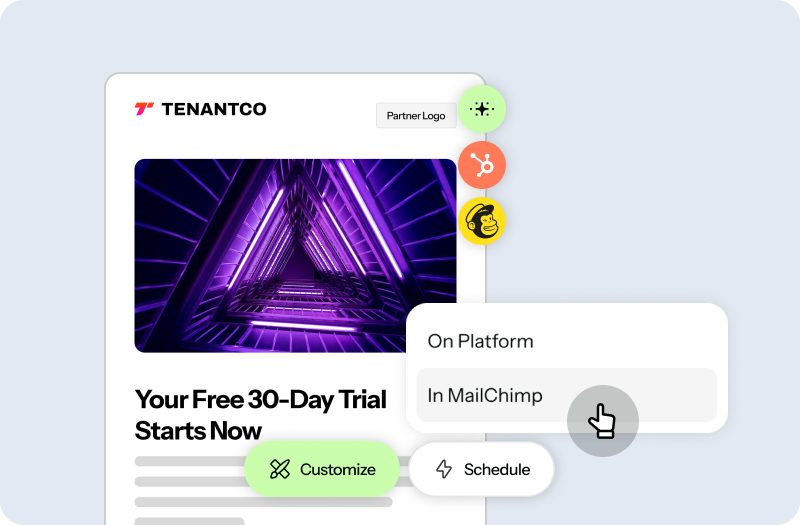
Co-branding combines vendor credibility with partner relationships, creating campaigns that feel both trusted and locally relevant. Solutions that support co-branded campaign execution help organizations combine vendor and partner branding, maintain alignment across markets, and improve local credibility.
When co-branding is automated and governed, partners can launch campaigns faster while protecting brand integrity.
Localized Content and Messaging
Localized content helps campaigns reflect the needs of specific audiences and markets. By adapting campaigns based on geography, language, industry, and customer priorities, organizations can improve market relevance and increase engagement rates. Localization allows partners to connect with customers more effectively while supporting regional growth initiatives.
Governed Brand Control
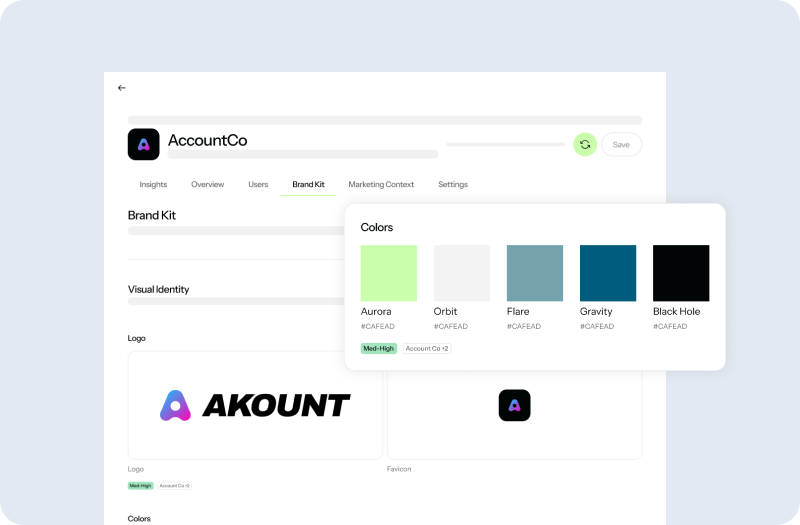
Personalization should not come at the expense of compliance or brand standards. Organizations need guardrails that allow partners to customize campaigns while maintaining approved messaging and reducing off-brand execution. Strong governance helps vendors scale personalization without introducing unnecessary risk.
Centralized Visibility into Campaign Performance
Visibility is essential for understanding what is working across a partner ecosystem. Tracking execution across partners helps identify high-performing campaigns, reveal adoption trends, and highlight opportunities for improvement. These insights allow organizations to optimize personalization efforts and make more informed decisions about future campaigns.
Why Automation Matters More Than Manual Customization
Most vendors already understand their personalization strategy. They know which audiences they want to reach, which markets they serve, and why relevance matters. The challenge is operationalizing personalization across partners.
Manual workflows cannot scale globally because every content request, localization task, design update, and approval cycle requires additional coordination. As ecosystems grow, those requirements become increasingly difficult to manage.
Automation enables personalization without adding administrative overhead. Organizations can support more partners, more markets, and more campaign variations while reducing the amount of manual work required to keep programs moving.
This distinction is important. Structured does not create marketing strategy. Structured provides the AI-powered tools that help vendors and partners execute personalized campaigns more efficiently.
Measuring the Impact of Personalized Marketing
Personalization should drive measurable business outcomes.
Organizations need visibility into partner engagement and campaign activity to understand which programs are gaining traction. Measuring localized campaign performance reveals which messages resonate with different audiences, while monitoring pipeline and revenue contribution connects marketing activity to business results.
Solutions designed for partner demand generation help vendors understand how campaigns contribute to opportunities and revenue across the ecosystem.
By identifying which personalization efforts drive results, organizations can continuously improve performance, allocate resources more effectively, and support stronger partner activation.
Better execution visibility leads to better personalization decisions.
The Future of Personalized Marketing in Partner Ecosystems
Going forward, customer expectations will continue to evolve, and partner ecosystems will need to respond faster than ever before.
Buyers will continue expecting highly relevant experiences. At the same time, ecosystems will become larger, more distributed, and more demanding. Supporting that growth through manual processes is not sustainable.
AI-native systems will help reduce operational bottlenecks by automating campaign adaptation, localization, and execution workflows. Partners will gain more self-service capabilities, allowing them to personalize and launch campaigns without waiting for vendor teams to manage every step.
The future of marketing personalization is not more manual customization – it is AI-enabled execution at scale.
Why Structured
Structured is an AI-native platform built specifically for partner marketing execution.
Most vendors know what effective personalization should look like. The problem is getting it into market across a large partner ecosystem without adding more manual work, delays, or pressure on internal teams. As programs expand across industries, regions, and customer segments, execution becomes the barrier between strategy and revenue.
Structured removes that barrier. We make it easier for partners to personalize, localize, and launch campaigns within approved guardrails, so vendors can scale marketing without slowing teams down or losing visibility.
The result is partner marketing that moves faster, reaches more customers, and turns personalization into measurable growth.