Partner marketing has never suffered from a lack of ideas.
Most organizations already have campaigns, content, messaging frameworks, and co-marketing programs available to their partners. They invest heavily in enablement resources designed to help partners generate demand and contribute to revenue growth.
Yet many partner ecosystems continue to struggle with the same problem. Execution.
The challenge is not creating campaigns. The challenge is getting campaigns launched across hundreds or thousands of independent partners operating in different markets, industries, and regions.
Every manual process introduces friction. Partners need to customize messaging, content requires localization, and approvals take time. Campaign setup becomes another task competing for attention against sales goals and customer commitments.
The result is predictable. Programs that look strong on paper often generate limited participation in practice.
This is why automated channel marketing has become a strategic priority for partner-focused organizations. The vendors seeing the strongest partner-driven growth are not simply producing more content. They are removing the barriers that prevent partners from acting on it.
What Is Automated Channel Marketing in a Partner Ecosystem?
When people discuss automated marketing, they often think about internal marketing operations. They think about email workflows, lead nurturing, campaign scheduling, and CRM integrations.
Partner ecosystems operate under a different model.
Execution is distributed. Vendors do not directly control every campaign launch. Partners decide which programs they adopt, which audiences they target, and how quickly they bring campaigns to market.
That distinction changes the role of automation.
In a partner ecosystem, automated marketing is not primarily about improving internal efficiency. It is about enabling execution across a network of independent organizations.
Partners need the ability to launch campaigns without relying on vendor teams for every adjustment, approval, or customization request. If execution depends on constant support, scale becomes impossible.
This challenge becomes more pronounced as ecosystems grow. Every new partner introduces unique market requirements, audience expectations, and business priorities. Supporting those differences manually creates complexity that slows adoption.
The most effective automation strategies focus on reducing that complexity. They allow partners to create, personalize, and launch campaigns with minimal effort while maintaining alignment with brand and compliance requirements.
The goal is not automation for its own sake. The goal is making execution easier.
This is ultimately why marketing automation is important in a partner ecosystem. When execution becomes easier, participation increases. When participation increases, more campaigns reach the market, more partners engage, and partner programs are far more likely to generate meaningful business results.
Why Manual Partner Marketing Breaks Down
Most partner programs begin with a familiar process.
A vendor creates a campaign. Marketing assets are developed, messaging is approved, and content is uploaded into a portal. Partners are notified that new resources are available.
From the vendor’s perspective, the campaign is ready. From the partner’s perspective, the work is just beginning.
The campaign may need to be adapted for a specific industry. Messaging may need to reflect local market conditions. Language may need to be translated. Brand elements may require adjustments. Internal approvals may be necessary before anything can launch.
Each additional step creates another point of friction.
Over time, those small barriers compound. Partners delay execution and marketing requests accumulate. Vendor teams become responsible for supporting customization, reviewing materials, and troubleshooting launch issues. Meanwhile, partners remain focused on activities that directly impact their business.
When campaign execution becomes difficult, many simply choose not to participate. This creates a cycle that limits the effectiveness of partner programs. Adoption remains low. Marketing resources go unused. Vendor teams spend significant effort supporting a relatively small percentage of active partners.
The challenge becomes even greater across global ecosystems.
A campaign that resonates in one market may not resonate in another. Industry-specific language, cultural nuances, and regional regulations all influence campaign effectiveness. One-size-fits-all programs rarely deliver strong results across diverse partner communities.
The business impact extends well past marketing operations. Manual processes slow partner engagement, brand experiences become inconsistent, and pipeline opportunities are missed. Ultimately, revenue growth suffers because execution cannot keep pace with strategy.
The Role of Automation in Driving Partner Execution
Automation changes the equation by removing the friction that prevents partners from launching campaigns.
Rather than asking partners to utilize multiple systems, submit requests, and wait for approvals, automation creates a more direct path from campaign availability to campaign launch. This shift has a meaningful impact on partner behavior.
When campaigns are easier to execute, participation increases. When customization becomes simpler, adoption improves. When localization no longer requires extensive manual effort, partners are more likely to bring campaigns to market.
The value of automation is not that it eliminates flexibility. It is that it removes unnecessary work.
Partners still need campaigns that reflect their market realities. They still need the ability to tailor messaging for their audience. They still need room to differentiate themselves while remaining aligned with vendor objectives. Automation supports those needs without creating operational complexity.
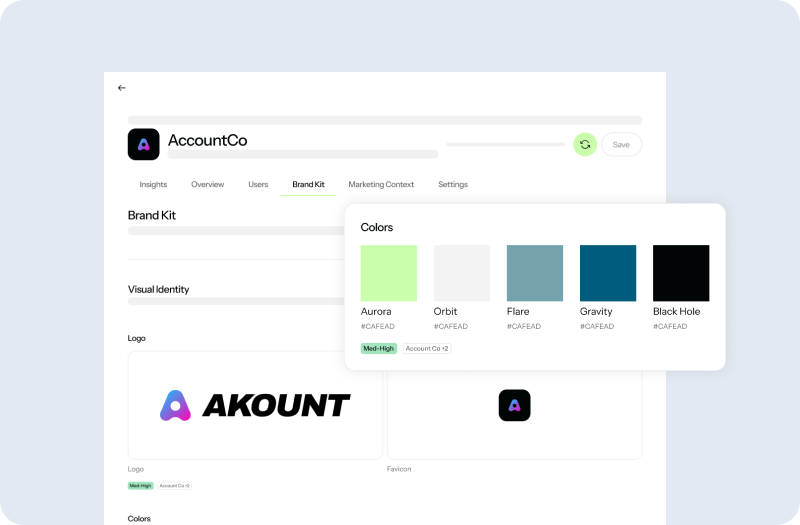
Vendors also gain greater control over execution quality. Governance, compliance requirements, and approved messaging can be embedded directly into campaign workflows. This allows organizations to maintain consistency across their ecosystem without creating bottlenecks.
The result is a model that benefits both sides. Partners gain independence. Vendors gain scale. Execution accelerates.
Most importantly, marketing teams can shift their attention away from administrative tasks and toward activities that drive growth.
How AI-Native Automation Changes Partner Marketing
Traditional automation focused on streamlining workflows. AI-native automation fundamentally changes how partner marketing execution happens.
Historically, partners were expected to learn systems, search for assets, select templates, customize content, and configure campaigns before anything could launch. Even with automation, the process often remained time-consuming.
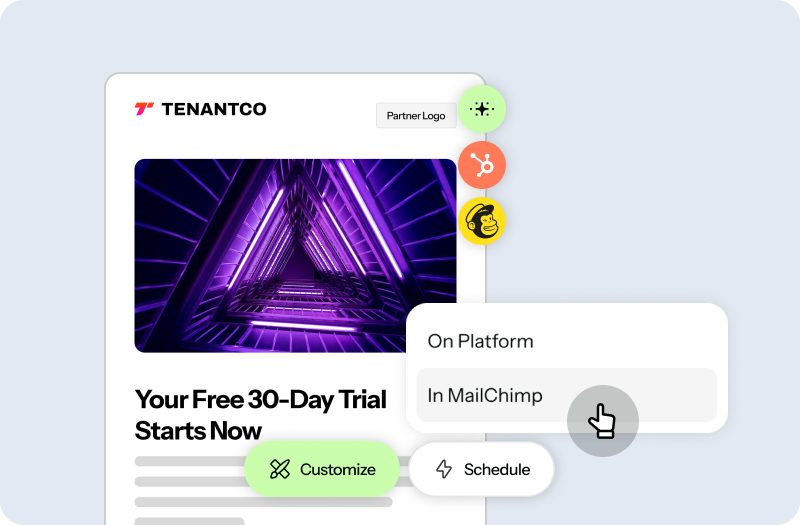
AI-native systems remove much of that difficulty. Partners can simply describe what they want to accomplish, and the platform generates the campaign, adapts the messaging, applies branding standards, and prepares content for execution.
The experience becomes dramatically simpler.
Partners no longer need to spend time searching for resources or figuring out how to adapt campaigns to their audience. The platform handles those tasks through automation. This is where AI begins to change adoption.
The challenge in partner marketing has never been a lack of available content. Most ecosystems already have more assets than partners can realistically use. The challenge is turning those assets into action.
The impact extends beyond speed.
Partners are more likely to participate because the effort required to execute has been dramatically reduced. Vendor teams spend less time managing operational requests. Programs become easier to scale because execution no longer depends on manual intervention.
The organizations that embrace AI-native approaches are not simply improving efficiency. They are creating a fundamentally different execution experience for their partners.
From Automation to Measurable Partner Revenue
Execution is only part of the equation. Organizations also need visibility into what is working.
Many partner programs struggle to connect activity with outcomes. Campaigns are launched, content is distributed, and engagement occurs, but understanding which efforts contribute to pipeline and revenue remains difficult.
This creates a measurement problem. Without visibility, optimization becomes guesswork.
Organizations cannot easily identify which campaigns perform best, which partners generate the strongest results, or which markets create the greatest opportunities. Decisions are made with incomplete information.
Effective automation addresses this challenge by connecting execution data to business outcomes.
When campaign activity, partner engagement, and performance metrics are captured within a unified system, organizations gain a clearer understanding of what drives success. Patterns begin to emerge.
Certain campaigns outperform others. Specific industries respond more favorably to particular messages. Some regions generate stronger engagement than expected. High-performing partners reveal behaviors that can be replicated across the ecosystem.
These insights create opportunities for continuous improvement.
Marketing teams can refine campaigns based on performance data. Resources can be allocated more effectively. Partner support efforts can focus on activities that generate measurable results.
Partner marketing then becomes more predictable as decisions are informed by evidence, not assumptions. This is why automation without visibility is incomplete.
Execution creates activity and measurement creates growth. Together, they create a framework for scaling partner revenue.
Key Benefits of Automated Partner Marketing
Automated partner marketing creates value by turning strategy into repeatable action across the ecosystem. Instead of relying on individual partner motivation or manual vendor support, organizations can create a system where execution becomes easier to start, easier to manage, and easier to measure.
Speed to Market
Partners can move campaigns from concept to launch faster because the steps between asset availability and market execution are reduced.
Broader Ecosystem Participation
A simpler experience allows more partners to engage, not just the small group already comfortable navigating traditional systems.
Controlled Flexibility
Partners can adapt campaigns for their markets while vendors maintain the governance, messaging, and brand standards needed at scale.
Greater Operational Focus
Vendor teams spend less time managing execution requests and more time improving programs, analyzing results, and supporting growth.
Scalable Revenue Impact
As more partners launch campaigns with less friction, organizations create more opportunities for partner-sourced pipeline without adding unnecessary operational complexity.
This is where purpose-built automation matters. A traditional automation tool may support internal workflows, but partner ecosystems require technology designed for distributed execution.
Conventional marketing automation software, legacy marketing automation tools, and broad marketing automation platforms often improve process management without solving the deeper challenge: helping partners take action.
Why Automated Marketing Is Now a Requirement
Partner ecosystems continue to grow in both size and intricacy.
Organizations are expanding into new regions, supporting larger partner networks, and pursuing more specialized go-to-market strategies. The opportunities are significant, but so are the operational demands. Manual processes cannot keep up.
What works for dozens of partners breaks down when ecosystems expand into the hundreds or thousands. Supporting every customization request, approval cycle, and localization effort becomes increasingly difficult.
Partners expect a different experience. They expect speed, personalization, and the ability to launch campaigns without waiting for vendor intervention.
Organizations that fail to provide that experience create friction that limits participation. Those that remove friction gain an advantage. They activate more partners, launch more campaigns, and generate more pipeline opportunities across their ecosystem.
The vendors that win are not necessarily the ones with the largest partner networks. They are the ones that make execution effortless.
Why Structured
Most partner marketing programs don’t struggle because they lack campaigns, content, or strategy. They struggle because execution is difficult.
We built Structured to solve that problem.
Structured is an AI-native platform designed specifically for partner marketing execution. It enables partners to create, personalize, localize, and launch campaigns in minutes through a simple conversational experience. Instead of navigating portals, searching for assets, or waiting for support, partners can move directly from intent to action.
With us, organizations also maintain the governance, visibility, and control needed to scale across complex partner ecosystems. Through our solutions designed for partner activation and streamlined campaign execution, we help vendors make it easier for partners to participate while providing the insight needed to measure business impact.
The result is more than operational efficiency. It’s more campaigns reaching the market, higher partner engagement, and a stronger connection between partner activity and revenue outcomes.
Because partner marketing success isn’t determined by the campaigns you create. It’s determined by the campaigns your partners actually execute. And that’s exactly what Structured was built to help scale.