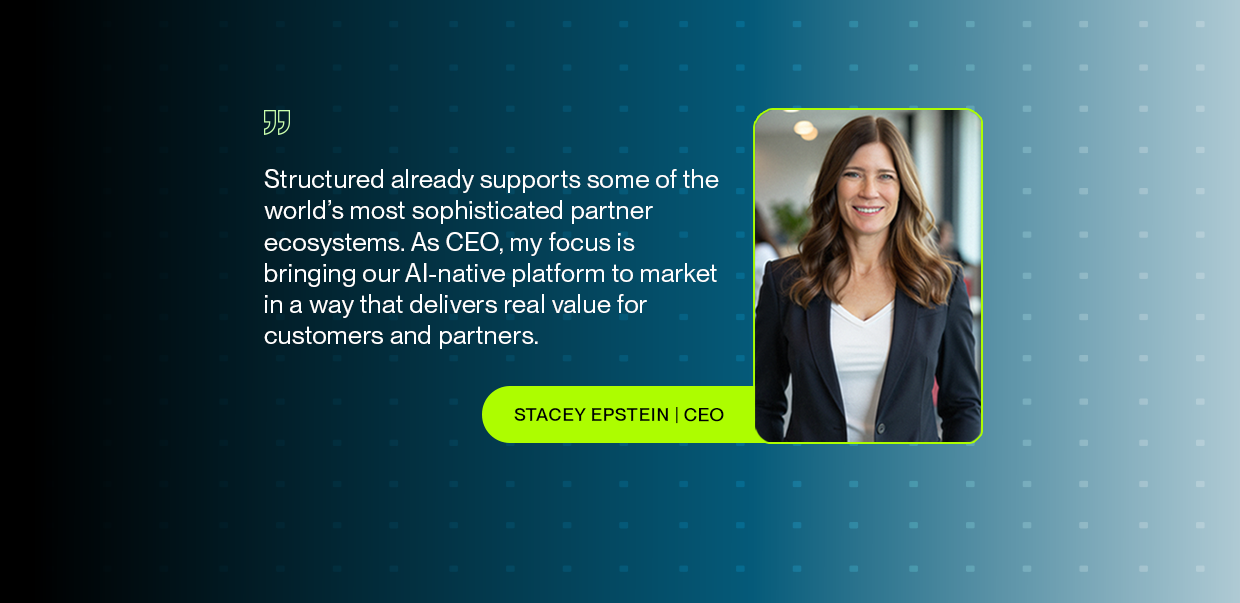

By Stacey Epstein | CEO, Structured
I’ve sat on both sides of the partner marketing equation.
As a partner marketer, I was measured on activation and revenue, with a long list of partners who should be driving demand but rarely did. As a CMO, I was accountable for pipeline and growth, constantly asking a hard question: where can I invest that will actually turn into revenue?
Partner marketing should have been the obvious answer.
In practice, it was always a hard lever to pull.
Here’s the truth we don’t say out loud: partners bring very different levels of marketing sophistication, from teams with deep expertise to leaders who wear ten hats. Yet we expect all of them to operate inside systems designed for full-time marketers.
We give partners training, certifications, campaign kits, and asset libraries. Then we ask them to decide what to launch, how to customize it, when to run it, and how to stay on brand, all while running their own businesses and serving customers.
The problem isn’t partner intent.
It’s friction.
Enablement Isn’t the Same as Activation
Enablement matters. I’ve built plenty of programs around it.
But training alone doesn’t turn into pipeline.
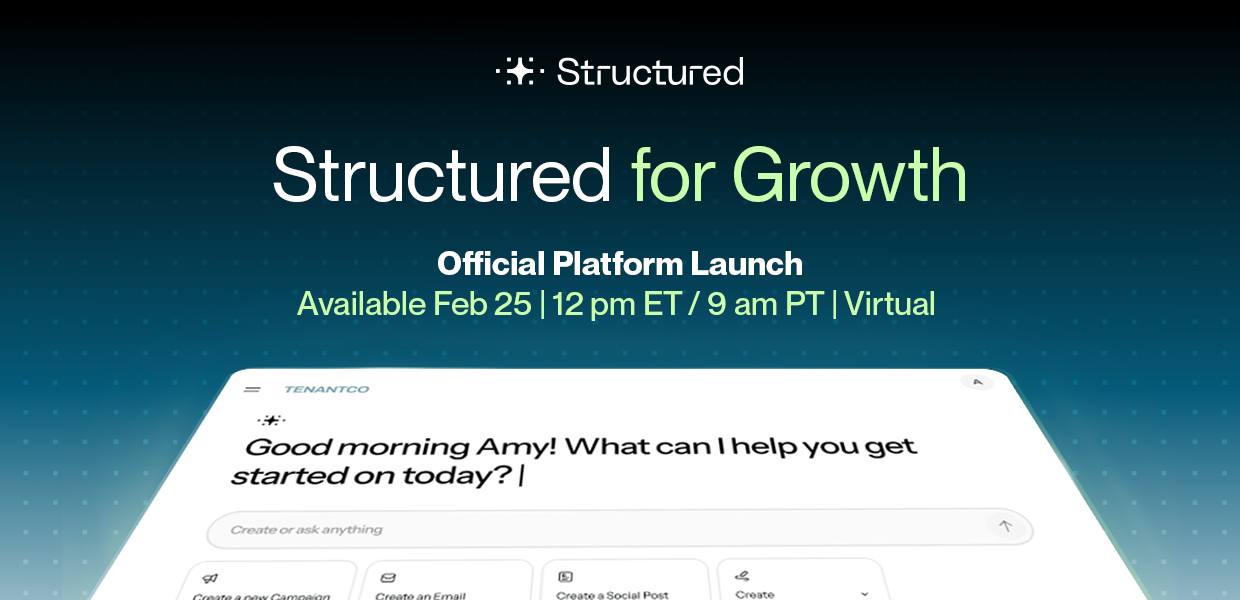
That’s what we’re tackling at Structured for Growth on February 25.
Even experienced partner marketers face friction: deciding which campaign to run next, adapting messaging for specific markets, staying compliant, and proving ROI, often across multiple vendors at once. For partners without dedicated marketing teams, that friction is even higher.
That gap, between being enabled and being active, is where partner marketing breaks down. And as a CMO, that gap showed up directly in my revenue forecasts.
What Changes When Execution Becomes Automatic
The breakthrough isn’t creating better content, or worse yet, replacing partner marketers.
It’s removing unnecessary work so every partner can execute at a professional level.
With AI-driven execution, partners start with intent, not templates.
They define their goal, the audience, the market, the outcome, and the system handles the rest: messaging, campaigns, channels, and compliance, all aligned to the brand and tailored to each partner’s context.
For partners with strong marketing teams, this accelerates execution and scale. For partners without them, it removes the friction barrier entirely.
Either way, execution becomes consistent, on-brand, and the outcome becomes measurable.
Why This Matters to CMOs
When friction disappears, behavior changes.
More partners execute, and they execute more often. Campaign quality improves. Impact becomes measurable. And partner-sourced and partner-influenced pipeline stops being a black box.
That’s the shift I always wanted as a CMO: not more enablement, but predictable partner execution that shows up in revenue.
That’s what we’re focused on at Structured and what we’ll be unpacking at Structured for Growth on February 25.
Activation doesn’t have to be your bottleneck anymore.