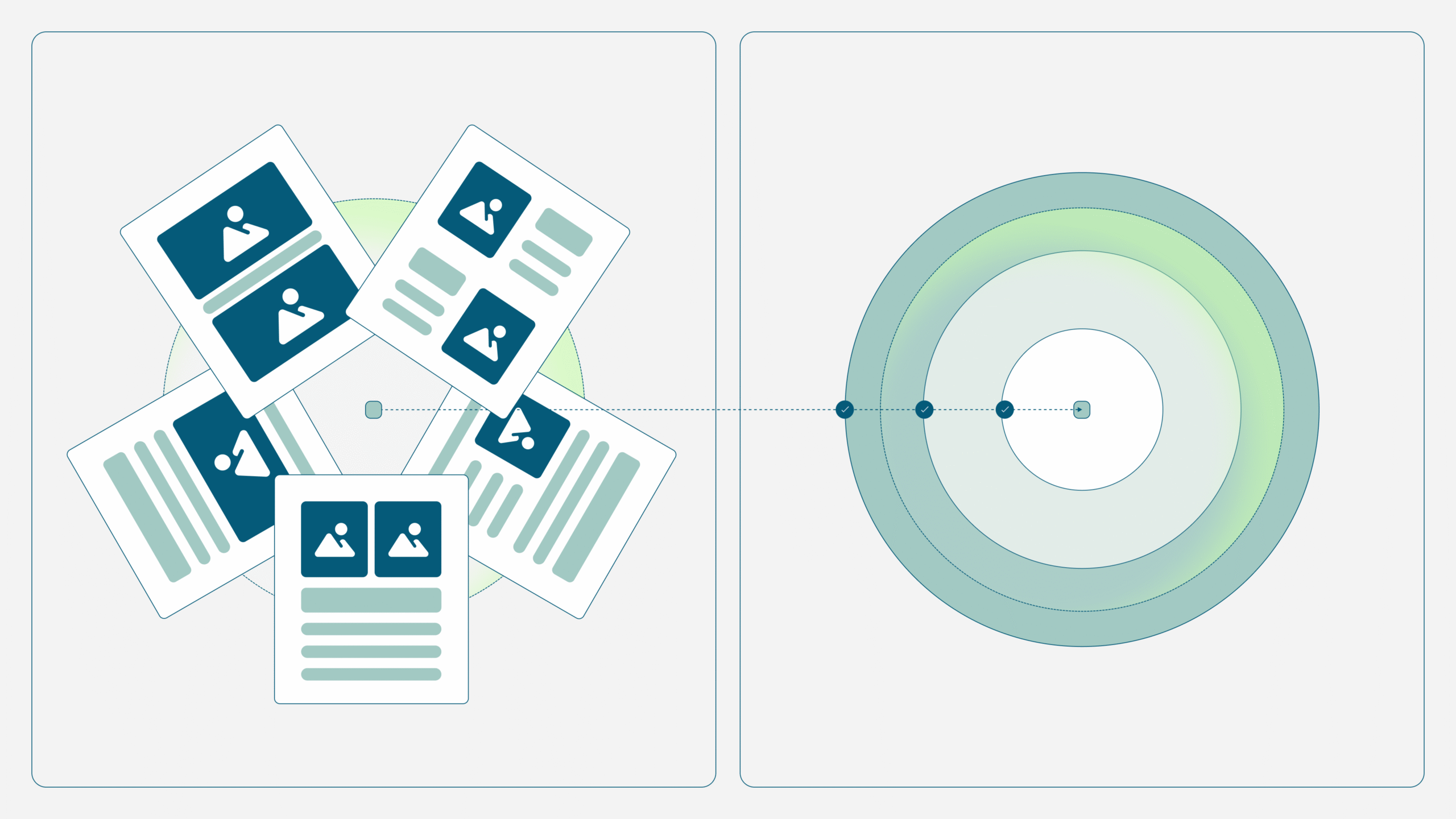
For years, templates have been the backbone of partner content delivery. Vendors build a library of pre-approved assets, partners plug in their logo and contact info, and campaigns go out the door. It works. Until it doesn’t.
The template model hits a ceiling fast. Partners operating in different markets, industries, and segments need more than a logo swap. They need content that fits their buyers. And when the only option is a rigid template or a manual request ticket, most partners disengage. The content sits unused.
Structured’s AI platform changes this equation.
Where Templates Fall Short
Templates solve one problem well: brand control. A locked template ensures partners can’t go off-script, make unauthorized claims, or break visual guidelines. That’s valuable. But the challenges outweigh the benefits.
Limited flexibility. A template built for U.S. enterprise buyers doesn’t work for a partner selling to mid-market companies in Brazil. The messaging is wrong. The proof points don’t resonate. The compliance language may not even apply. Partners either force-fit the template or abandon it.
Bottlenecks at scale. When partners need something beyond what the template allows, they submit a request. That request goes into a queue. Someone on the vendor’s marketing team reviews it, makes the changes, routes it for approval, and sends it back. Multiply that by hundreds of partners and dozens of campaigns. The queue grows. Turnaround times stretch. Partners miss their window. The whole system slows to a crawl.
Low adoption, wasted investment. Vendors invest heavily in building content libraries. But when partners can’t find assets that fit their needs, those libraries collect dust. The 65% of B2B content that goes unused isn’t a volume problem. It’s a relevance problem. Templates don’t solve relevance at scale.
What AI-Native Partner Marketing Looks Like
The shift from templates to AI is about enabling personalization within guardrails, at a speed and scale that manual processes can’t match.
With AI-native partner marketing automation, partners describe what they need in plain language. The AI generates a customized, brand-compliant asset on demand. No template hunting. No request tickets. No waiting days for a simple localization or segment adjustment.
Here’s What Changes:
From selecting to requesting. Instead of browsing a library and hoping the right template exists, partners simply just ask for what they need. “Adapt this case study for healthcare buyers in Germany.” The AI handles the rest.
From days to minutes. Manual customization requests that once took a week now take seconds. Partners get content while the campaign is still relevant. Velocity goes up. Engagement goes up.
From rigid to modular. AI can adjust any dimension of the content: co-branding, language, industry messaging, buyer role, company size, even account-specific details. Partners apply the customizations they need without being locked into a one-size-fits-all format.
From control vs. flexibility to control with flexibility. The AI is trained on the vendor’s brand guidelines, messaging framework, and compliance requirements. Guardrails are built in. Partners get freedom to personalize. Vendors keep oversight and consistency.
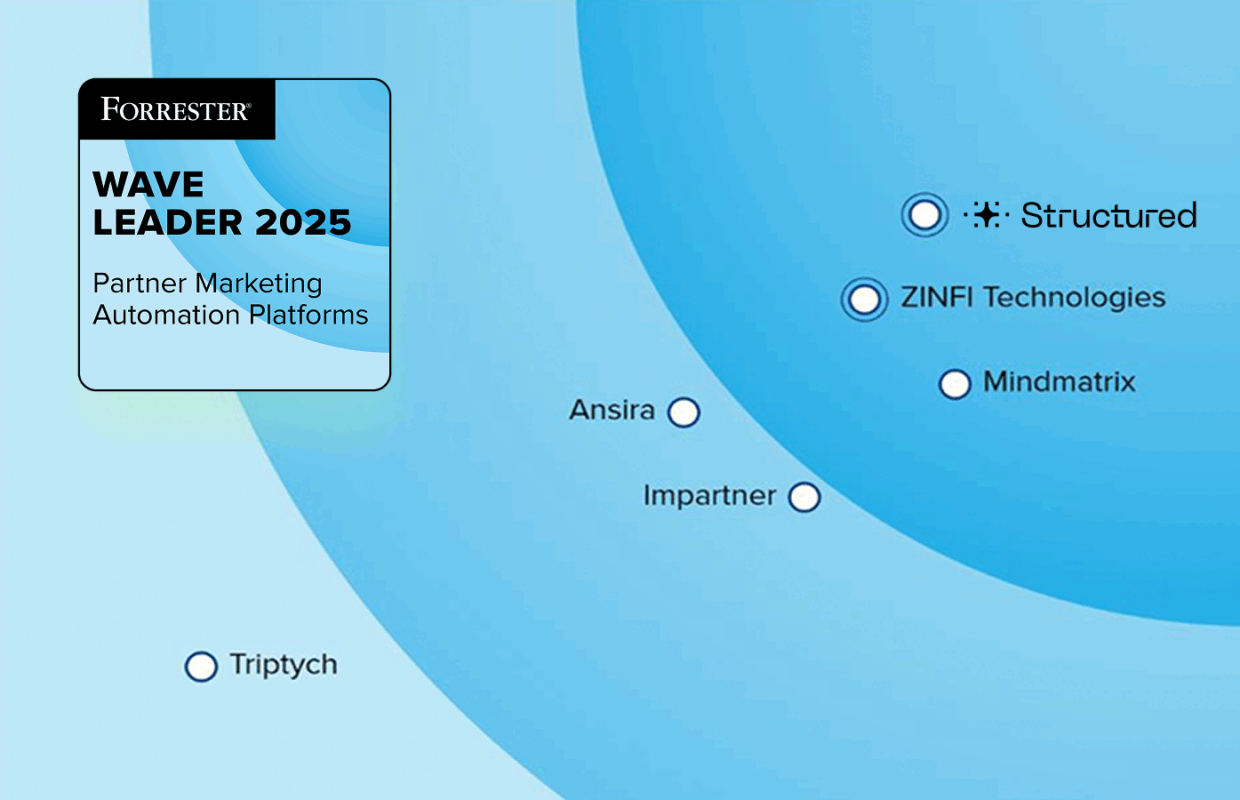
This is the approach that earned Structured the highest possible score in Customization, Localization & Personalization in The Forrester Wave for Partner Marketing Automation Platforms, Q2 2025. It’s how leading enterprise tech vendors are activating their partner ecosystems today.
Why Does Content Flexibility Matter for Channel Marketing Content Automation?
The economics of content customization have shifted. What once required a dedicated team or an expensive agency can now happen automatically, at scale, for every partner in the ecosystem.
This has downstream effects across the channel:
Higher content utilization. When partners can get exactly what they need, they stop ignoring vendor content and start deploying it. Campaign participation increases.
Faster time to market. Partners launch campaigns while opportunities are live, not after the moment has passed. The channel becomes more responsive.
Better lead quality. Personalized content resonates. Prospects see themselves in the story. Conversion rates improve because the content fits the audience.
Reduced risk. AI trained on brand and compliance guardrails produces safer outputs than partners improvising on their own. Vendor legal and brand teams spend less time policing and more time enabling.
The Framework Behind Structured’s AI for Partner Marketing
AI is the engine. But it needs a framework to know what to personalize and how. That’s why we developed PRISM: a model for thinking about partner content personalization across five dimensions.
- P — Partner Identity (co-branding, logos, contact info)
- R — Region (language, cultural adaptation, compliance)
- I — Industry (vertical-specific messaging and proof points)
- S — Segment (company size, buyer role, journey stage)
- M — Micro (account-specific customization for ABM)
Each dimension can be applied independently or in combination. The AI makes it operational. Partners just ask for what they need.