By JORDAN CASSIDY | VP OF MARKETING, Structured
Most partner programs generate a fraction of the pipeline they should. The PRM vs PMAP question is usually why. The content is there. The partners are onboarded. But somewhere between “assets available” and “campaign live in market,” the whole thing stalls.
The culprit isn’t a broken PRM. It’s a gap the PRM was never designed to close.
What a PRM does
A PRM is the operational backbone of a partner program, and it should stay at the center of one. It manages onboarding, deal registration, MDF, training, certifications, and partner communications. It answers one question well: who are our partners, and how are we managing them?
That’s the right question for a PRM. The problem is when organizations expect the same system to also answer a different one: how are partners going to market, and what are they generating?
“But our PRM already has marketing built in”
Most do. That’s not the issue.
The question isn’t whether marketing functionality exists in your PRM. It’s whether that functionality actually gets partners to market. A content repository — a place to grab a logo and a one-pager — is not the same as a system that helps a partner build, localize, launch, and measure a campaign. Access is not activation.
That shortfall isn’t a flaw. PRMs were built to manage relationships and program operations. Campaign execution, personalization, localization, and performance visibility were never the primary job.
The Activation Gap
The PRM vs PMAP distinction is what defines the Activation Gap — the distance between “the assets are available” and “the campaign is live and generating pipeline. When it goes unaddressed, the symptoms are predictable: adoption stays low, personalization happens one partner at a time, localization becomes a manual market-by-market effort, and reporting measures activity instead of impact.
The cost isn’t abstract. It’s pipeline.
What a PMAP does
Now that the problem has a shape, the solution has a name. A Partner Marketing Automation Platform (PMAP) is the system that helps partners actually go to market. Where a PRM manages partners, a PMAP helps partners activate marketing programs through campaign deployment, content personalization, localization, and visibility into the outcomes those efforts generate.
PMAP is the B2B evolution of through-channel marketing automation (TCMA). It’s the category Forrester formally recognized in its 2025 Wave report, distinguishing modern B2B partner marketing from legacy TCMA approaches. While TCMA focused primarily on content distribution, PMAP expands the category to include partner activation, personalization, AI-guided experiences, and measurable business impact.
The simplest way to understand the difference:
- PRM
Who are our partners, and how are we managing them? - PMAP
How are partners going to market, and what are they generating? - Together
How do we turn partner relationships into revenue?
What the execution layer actually does
A PMAP closes the Activation Gap by adding the execution layer a PRM leaves open. Each capability answers a specific shortfall:
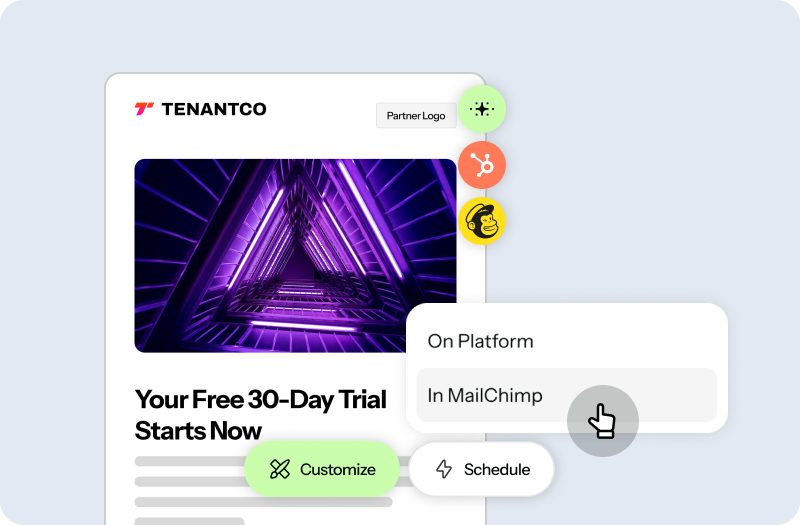
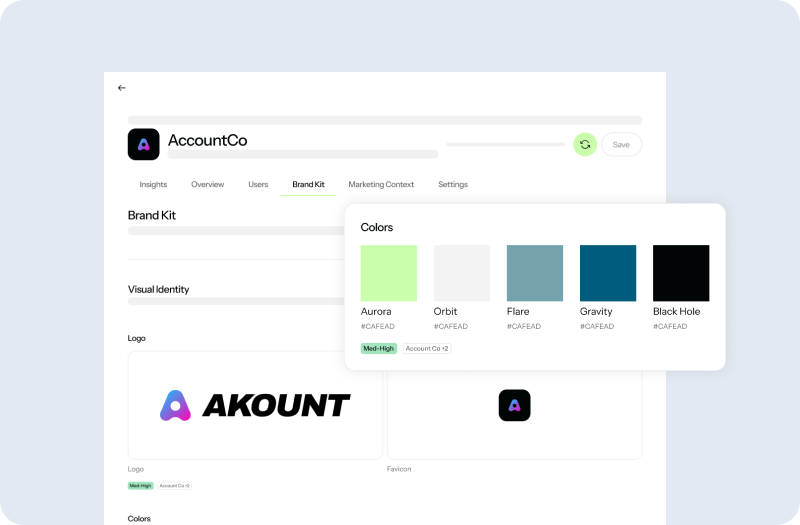
- Asset library. Partners browse and co-brand approved content instead of downloading from a static repository.
- Campaign activation. Partners move from downloading assets to launching campaigns.
- Content personalization. Every partner gets content tailored to their tier, region, and solution focus, at scale.
- Localization and translation. Work that took weeks happens in a fraction of the time.
- Revenue visibility and attribution. Channel leaders see pipeline value and realized revenue, not just portal logins.
- AI-powered discovery and execution. Partners describe what they’re trying to accomplish, and the platform guides them to the right content, campaigns, and next steps.
The common thread is movement: from access to action, from managed partners to active marketing participants.
PRM vs PMAP: Why the Strongest Programs Run Both
A PMAP doesn’t replace your PRM. It adds the execution layer the PRM leaves open. Partners don’t generate pipeline because content exists. They generate pipeline when they can find it, personalize it, launch it, and measure the results.
Your PRM built the foundation. A PMAP is what makes it produce.