Rethinking Social Media in Modern Campaigns
Most conversations about social media still treat it as a standalone activity. Teams plan posts, manage calendars, and track engagement as if performance within a single social media platform determines campaign success.
That perspective overlooks how vendors actually go to market.
Vendors rely on partners to bring campaigns into real markets. Those partners are independent businesses, each selling to their own customers across industries and regions. Social does not sit within one centralized team. It lives across a distributed network of organizations responsible for execution.

When social is handled in isolation, campaigns begin to fragment. Messaging varies from one partner to another. Timelines drift. Reach becomes limited to corporate channels instead of expanding through the partner ecosystem. The issue is not a lack of content or creativity. It is the difficulty of enabling execution at scale.
At Structured, we approach this differently. Social is not treated as a standalone marketing action. It is one execution surface within a broader campaign. The goal is not to manage posts but to make it easy for partners to participate. This shift is where the real benefits of AI in social media begin to take shape.
After all, AI isn’t just about producing content faster. It unlocks execution – allowing campaigns to move through partner networks with speed, stay aligned across every touchpoint, and reach markets that centralized teams simply can’t access on their own.
The Traditional Challenges of Social Media Marketing
Once social is viewed through a channel lens, the limitations of traditional social media marketing become clear.
Centralized teams are expected to support multiple partners across different markets, but they cannot realistically produce or adapt content at that scale. Even when assets exist, they often require modification before partners can use them, which slows everything down.
As a result, partners frequently create their own social media content. While this keeps activity moving, it introduces new challenges. Messaging starts to diverge, tone shifts, and campaigns lose cohesion across the ecosystem. This is where co-branding becomes critical.
Partners need to market under their own name to establish credibility with their audience. If vendor campaigns do not support co-branded execution from the start, partners are forced to rebuild them. That is when errors, inconsistencies, and delays begin to surface.
Coordination across channels adds another layer of complexity. Social needs to connect with email outreach, landing pages, and other campaign elements. When those pieces are not aligned, each interaction feels disconnected from the next. Even when internal execution is strong, reach remains limited. A single corporate presence cannot match the scale of a partner network.
The challenge is not the channel itself. It is making execution simple enough that partners actually use what is provided.

What Does AI for Social Media Actually Mean Today
Many organizations think of AI primarily as a tool for generating content. While that can improve internal workflows, it does not address the core challenge in channel marketing. The real issue is not how quickly content can be produced. It is how easily campaigns can be executed across partners.
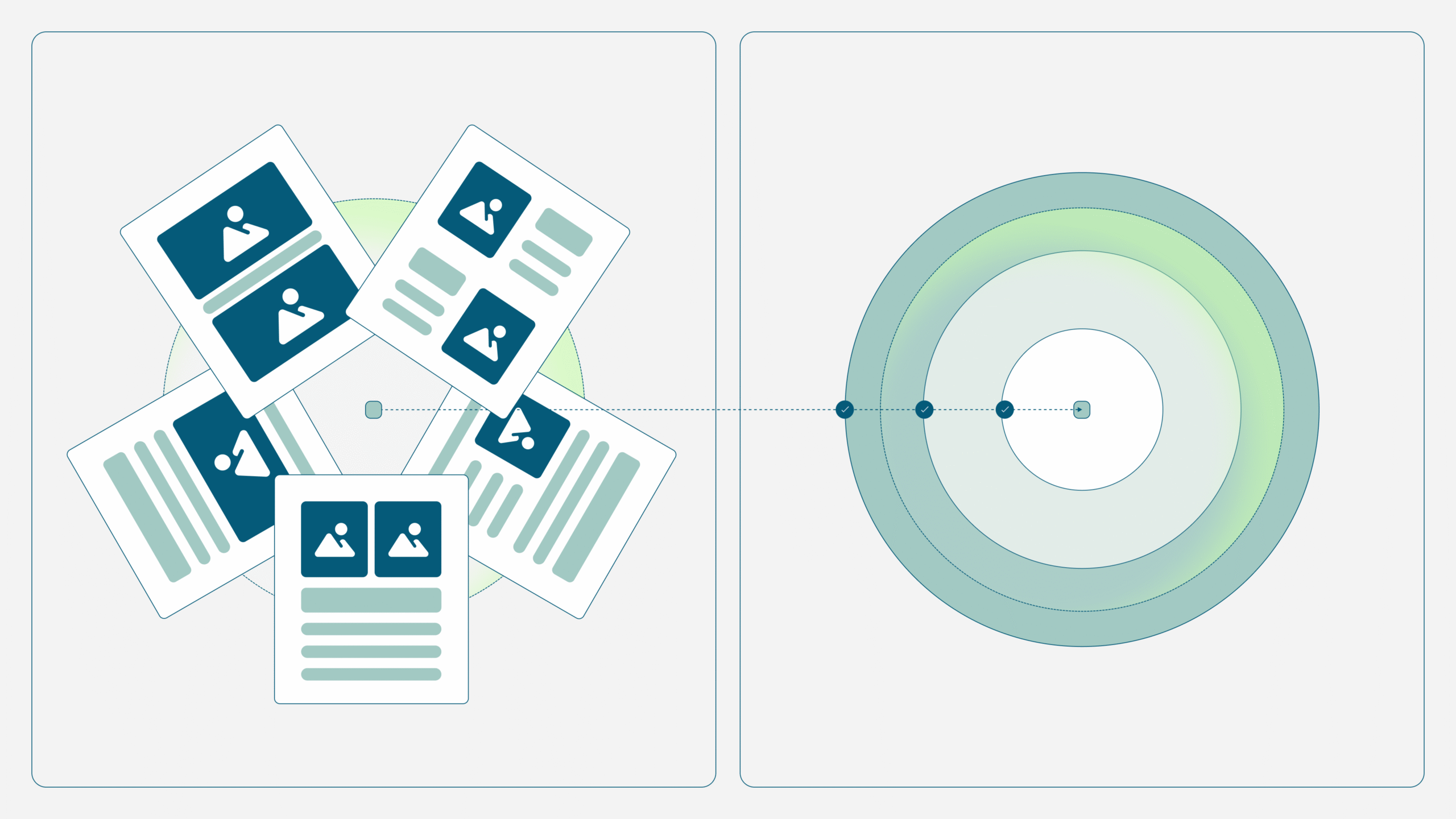
In this context, AI operates as an execution layer. It connects vendor-defined campaigns to partner activity, allowing assets to be distributed in a way that is structured, usable, and ready to deploy. The focus shifts beyond content creation to enabling coordination across a network of independent organizations.
This changes how teams think about scale. The goal is no longer producing more, but enabling more participants to act.
The Shift: From Social Media Management to Campaign Activation
Traditional tools focus on account management. They help teams schedule posts and monitor engagement within a single organization. That model assumes control sits in one place. In the channel, it does not.
Execution is distributed across partners, each operating within their own market. Vendors define campaigns, but partners are the ones who bring those campaigns to life. This requires a shift from management to activation.
The emphasis moves away from output and toward participation. Social becomes one part of a coordinated campaign that includes multiple touchpoints working together. This reframes how teams should approach social media strategy. It is no longer about maintaining activity. It is about enabling partners to execute campaigns effectively in their own environments.
How StructuredAI Enables Partner-Driven Social Campaigns
StructuredAI is built to support this execution model.
Vendors define campaigns at a global level. StructuredAI then transforms those campaigns into structured assets that partners can use immediately. Partners do not need to interpret messaging or build content from scratch. They can act with confidence.
Each asset is designed for co-branded execution. This allows partners to present campaigns under their own identity while maintaining alignment with vendor positioning. That distinction matters.
Partners are not extensions of the vendor. They are businesses with their own customers. Co-branding gives them the ability to market as the provider, not just distribute external messaging.
When this process is simple, partners engage. When it is difficult, they hesitate or go off script. Structured keeps everything aligned while allowing campaigns to scale across markets. To see how this works in practice, explore our AI marketing platform.
Pre-Built Content as a Scaling Engine
In channel marketing, content only matters if it leads to action. Pre-built, vendor-approved assets remove the effort required for partners to execute campaigns. There is no need to create, redesign, or wait for approvals.
Because these assets are already structured for co-branded use, partners can launch campaigns without additional work. They can move quickly while still presenting messaging that reflects both their identity and the vendor’s positioning.
This approach reduces friction for partners with limited resources. It also helps maintain alignment across regions without slowing down execution. Social media content creation becomes a foundation for action rather than a bottleneck.
Customization Without Losing Control
While structure is important, flexibility is just as critical.
Partners operate in different markets and need the ability to tailor messaging to their audience. At the same time, vendors need campaigns to remain aligned with their overall positioning. StructuredAI balances these needs.
Partners can adjust messaging within defined parameters, allowing them to reflect local priorities without straying from the campaign’s intent.
Co-branding reinforces this balance. It allows partners to personalize campaigns while maintaining credibility and connection with their audience. This combination of flexibility and structure makes it possible to scale campaigns without losing clarity.
Social Media as Part of Integrated Campaigns
Social is most effective when it works alongside other campaign elements. Posts should connect directly to email outreach, landing pages, and supporting assets. When messaging is aligned across these touchpoints, the campaign becomes easier to understand and more effective overall.
Each interaction reinforces the same idea, creating a more cohesive experience for the audience. In this model, social acts as an amplifier. It extends the campaign’s reach while supporting the broader narrative.
Scaling Campaign Reach Through Partners
One of the most powerful aspects of this approach is reach. Each partner represents a different route to market. They bring their own audience, relationships, and understanding of their customers.
When campaigns are activated across partners, reach expands naturally. Vendors engage a network of organizations that carry the campaign forward into their own markets and audiences. This creates a multiplier effect, where each partner adds visibility and momentum, increasing the campaign’s impact across regions.
For social media marketers, this shifts the definition of scale. It is no longer about increasing output. It is about increasing participation.
Key Benefits of AI for Social Media in This Model
When viewed through the lens of execution, the benefits of AI in social media become much more practical and impactful. Instead of focusing on content output alone, this model highlights how AI removes friction and enables campaigns to move across partner networks more effectively.
With the right structure in place, organizations can unlock several key advantages:
- Faster campaign rollout: Partners can launch quickly without waiting on content creation, approvals, or manual adjustments, allowing campaigns to gain momentum sooner.
- Aligned messaging across markets: Pre-built, structured assets keep campaigns on track, reducing the risk of mixed messaging as they expand across regions and partners.
- Expanded reach through partner networks: Campaigns extend beyond a single corporate presence, tapping into multiple audiences simultaneously for broader visibility.
- Greater operational efficiency: Partners are not responsible for building campaigns from scratch, freeing them to focus on execution.
- Increased partner participation: When the path to execution is simple, more partners engage, which drives stronger overall campaign performance.
Co-branding plays a central role in making these outcomes possible. When partners can present campaigns under their own identity alongside the vendor, the message feels more credible and relevant to their audience. That sense of ownership encourages participation, turning available campaigns into active execution across the ecosystem.
How This Approach Differs from Traditional Social Media Tools
Most tools are built for internal teams.
They focus on scheduling posts, managing accounts, or supporting social media content creation. While those capabilities can improve internal efficiency, they are based on a centralized model where one organization owns and executes all activity. That assumption does not hold in a channel environment.
In reality, execution is distributed across partners, each operating independently in their own market. Traditional tools do not address this dynamic. They help teams organize output, but they do not make it easier for partners to participate in campaigns.
Structured is designed for a different reality.
Execution happens across partners. The goal is not to manage activity but to enable campaigns to be executed across the channel in a way that is usable, aligned, and easy to deploy. Instead of focusing on post scheduling or account oversight, the focus shifts to making campaigns actionable for every participant in the ecosystem.
This is not a tool for internal production. It is an execution layer that supports distributed marketing, where the success of a campaign depends on how effectively partners can bring it to market.
When Businesses Should Adopt This Approach
This model is especially relevant for organizations that rely on partner ecosystems.
Vendors working with resellers, distributors, or other partners can use this approach to scale campaigns across their network without increasing internal workload. Rather than trying to manage execution centrally, they can enable partners to act independently while staying aligned with campaign objectives.
It is also valuable for multi-region campaigns, where alignment and speed are critical. Different markets require different messaging nuances, but campaigns still need to reflect a unified direction. This approach allows both to happen at the same time.
Organizations that struggle with adoption often find that the issue is not a lack of assets. In many cases, content exists but is not being used. The real barrier is the friction involved in turning that content into action.
When partners are not executing, the problem is usually process related. Too many steps, too much ambiguity, or too much effort required to launch a campaign. Reducing that friction unlocks participation and allows campaigns to gain traction across the ecosystem.
Why StructuredAI Is Built for This Future
StructuredAI is built around a simple idea.
Partners do not execute when the process is difficult or unclear. Even well-designed campaigns fail if they require too much effort to launch or adapt.
By removing friction from campaign deployment, StructuredAI makes it easier for partners to act. Campaigns are structured in a way that allows partners to move quickly, without needing to interpret, recreate, or wait for approvals. This simplicity is what drives adoption.
As more partners engage, campaigns expand naturally. Reach increases, messaging stays aligned, and results improve across markets.
The platform is designed to reflect how vendors actually go to market through partners. It supports distributed execution while maintaining control where it matters, allowing organizations to scale without adding operational complexity.
The Future of Social Media Is Distributed
Social is no longer about managing posts. It is about activating partners.
The organizations seeing the most impact are not the ones posting more. They are the ones enabling more participants to bring campaigns to market. AI makes that possible by removing the friction that holds partners back.
If your campaigns are not reaching their full potential, the issue is not content. It is execution. See how Structured helps you turn partner networks into active campaign engines.