PART TWO OF THREE
The Gap Shows Up Before Launch
The first post in this series made the case that access is not activation. Partners can have every resource available and still not take campaigns to market, usually because of how much work stands in the way rather than any lack of interest.
This post looks at where that work actually piles up. Partners are not quitting at launch. They are quitting at setup. And the cost of everything they must do before a campaign can run has a name worth adopting: the setup tax.
What the Setup Tax Is
The setup tax is the accumulated cost of everything a partner has to complete between deciding to run a campaign and actually launching it.
None of this work is glamorous, and none of it produces results on its own. Searching for the right content, adapting it, translating it, and configuring the launch each look minor in isolation. Together they form a real operational burden, paid entirely up front, before the partner sees any return.
That timing is what makes the tax so damaging. Motivation peaks the moment a partner decides to act, and every extra step spends some of it. By the time the launch itself is in sight, the effort required may have outrun the hours the partner had to give. The campaign does not fail at launch. It stalls somewhere in setup, and often nobody notices exactly where.
Seen this way, the setup tax stops looking like an administrative detail and starts looking like the main reason well-resourced programs underperform. Reducing it is one of the most direct levers a channel team has.
The Four Steps Where the Setup Tax Adds Up
The tax is easier to cut once you can see its parts. Most partners move through four stages before a campaign is live, and each one drains momentum in its own way.
Finding the right content
Before anything else, partners have to work out which campaigns and assets are current, approved, and relevant to their market. In a large library that means answering questions like: is this the latest version of the deck, is this offer still valid, does this campaign apply to my region? Time spent answering them is time not spent launching, and doubt about whether the materials are right can stop progress before it starts.
Customizing content for their audience
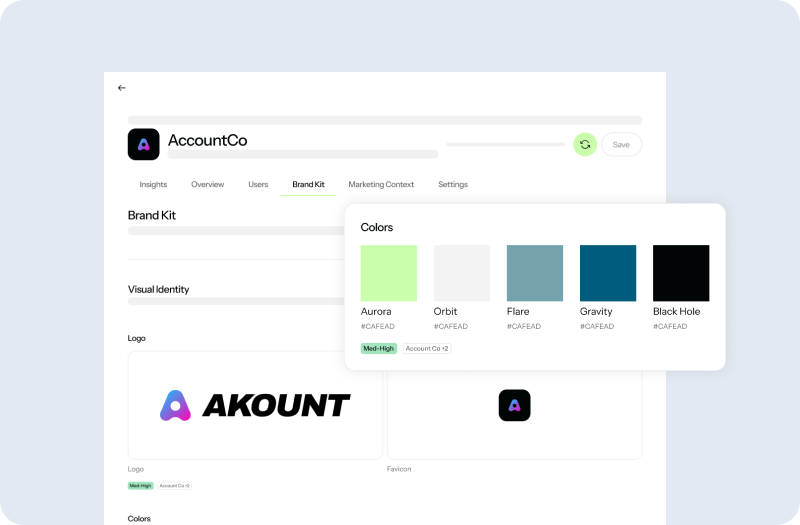
Once partners find the right content, they have to make it theirs. Messaging, offers, and branding need to fit their buyers while staying inside the vendor’s guidelines. It is a balancing act, and doing it well takes both time and a level of marketing skill that varies widely across a partner base.
Localizing content for their market
Partners serving regional markets face another layer. Content may need translating or adapting for different languages, local norms, and regulatory requirements. Localization is easy to underestimate from headquarters and slow to do by hand on the partner side. When it turns into a manual project, it is often where a campaign loses the last of its momentum.
Preparing the campaign for launch
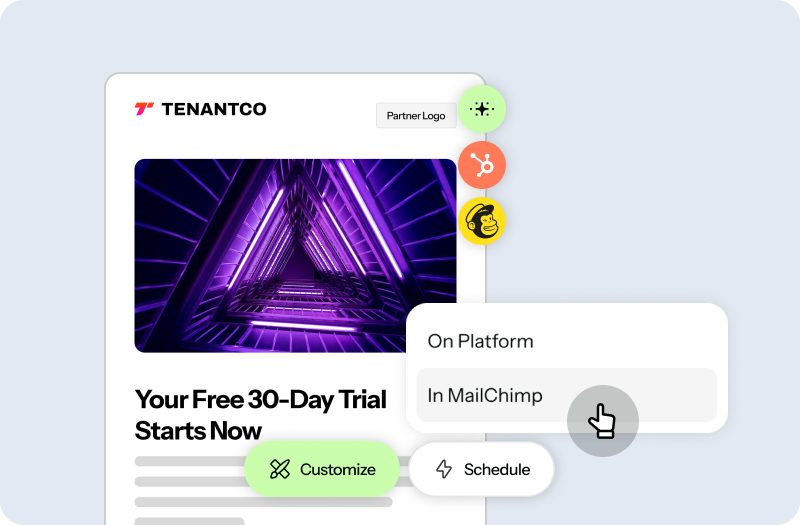
Finally comes configuration: building the audience list, connecting the landing page, scheduling the sends, and getting every setting in place. By this point the partner has already invested real effort, and if the setup is complex or unfamiliar, even a committed partner can run out of runway on the final stretch.
The Hard Truth About the Path to Execution
Put the four stages together and the pattern is clear. Campaigns stall before they ever launch, and the harder the road to launch becomes, the fewer partners travel it.
This reframes the problem in a useful way. When launch numbers are weak, the instinct is to scrutinize the launch moment or question partner commitment. If partners are dropping off during setup, neither is the real cause. The real issue is the length and difficulty of the path itself. Shortening that path will do more for activation than any change made at the point of launch.

WATCH THE WEBINAR
Setup is where campaigns quietly break down, and it is also where the biggest gains are waiting. Watch the Activation Gap webinar to see how leading programs shorten the path from intent to execution.
Reducing the Setup Tax
If setup is where campaigns break down, then lowering the setup tax is the work that matters most. The aim is to strip unnecessary effort out of each of the four stages so partners keep their momentum all the way to launch.
That starts with treating the path to launch as something to be designed rather than merely supplied. Make it obvious which content is current and approved. Give partners a pre-selected starting point instead of an open catalog. Reduce the translation and regional adaptation work that partners have to manage on their own. Each of these is a deliberate cut in the work required before a campaign can run.
Where AI fits
AI is one way to reduce that manual effort, and it is worth being precise about what that means. It does not build finished campaigns on its own. It can take repetitive work out of finding, adapting, and translating content by surfacing relevant approved materials and preparing drafts for a person to review. A partner might ask for approved content for a specific audience and market, or for an email sequence localized for a regional team, and get back a draft they then review, adjust, and approve.
A person stays in control throughout, and the partner still decides what runs. What changes is how much manual work stands between the decision and a usable draft. AI matters here only as a means to a shorter, clearer path to launch.
Seeing where partners get stuck
One more piece is easy to overlook. To cut the tax, teams first have to know where it is being paid. Track how many partners make it through each stage: discovery, customization, localization, and launch setup. If most get through discovery but drop off at localization, that is where to focus. Without that view the work is guesswork. With it, every fix is targeted.
Practical Takeaways for Channel Marketing Teams
- Adopt the setup tax as a lens: every step before launch is a cost partners pay up front.
- Pick one campaign and walk through all four stages as if you were a partner, timing each one.
- Track partner drop-off across discovery, customization, localization, and launch setup.
- Cut the heaviest manual stage first; for many programs that is localization.
- Keep a person in control of customization while removing the repetitive work around it.
Fix the Work Before the Work
The strongest partner programs are not the ones with the most content. They are the ones that shrink the work required to discover, customize, localize, and launch it. When the setup tax comes down, momentum survives long enough to reach the market, and activation improves as a result.
The activation gap starts before launch. That is both the challenge and the opportunity, because it points to exactly where the improvement has to happen.
Previous: Access Is Not Activation: Why Partner Programs Stall After Onboarding
Next: Measure Execution, Not Access: The Metrics That Reveal the Activation Gap